Every year on May 25, millions of people across Africa and around the world commemorate Africa Day. While many recognize it as a day of celebration, its true significance extends far beyond cultural displays, speeches, and public events.
Africa Day is a reminder of the continent’s shared history, collective struggles, remarkable achievements, and the responsibility every African has in shaping a better future.
As Africa continues to experience rapid population growth, technological innovation, urbanization, and economic transformation, conversations around accountability, good governance, education, healthcare, and community development have become more important than ever.
This article explores the history of Africa Day, why it remains relevant today, the challenges Africa must overcome, and how individuals, organizations, governments, and communities can contribute to sustainable development.
Table of Contents
- What Is Africa Day?
- The History of Africa Day
- Why Africa Day Still Matters Today
- Africa’s Progress Worth Celebrating
- Challenges Slowing Africa’s Development
- Agenda 2063: Africa’s Blueprint for the Future
- The Role of Citizens in Building Africa
- Why Humanitarian Organizations Matter
- How Young Africans Are Changing the Narrative
- Frequently Asked Questions About Africa Day
- Conclusion
What Is Africa Day?
Every year on May 25, millions of people across Africa and around the world celebrate Africa Day, a day that commemorates the founding of the Organization of African Unity (OAU) in 1963, now known as the African Union.
More than a date on the calendar, Africa Day symbolizes unity, resilience, liberation, and the shared commitment of African nations to build a peaceful, prosperous, and self-reliant continent.
For many people, Africa Day is an opportunity to celebrate culture, diversity, music, art, and heritage. However, its significance extends far beyond celebration. It is also a moment for reflection, honest conversations, and renewed commitment to solving the challenges that continue to affect millions of Africans.
Today, Africa Day has evolved into more than a historical anniversary. It has become an opportunity to reflect on Africa’s progress while encouraging governments, institutions, businesses, nonprofit organizations, and citizens to work together toward sustainable development. As governments, businesses, nonprofit organizations, and citizens reflect on Africa’s journey, one question becomes increasingly important:
What kind of Africa are we building for future generations?
That question lies at the heart of Africa Day.
Quick Answer: Africa Day is celebrated annually on May 25 to mark African unity, celebrate the continent’s achievements, and encourage collective action toward peace, development, and prosperity.
The History of Africa Day
To understand why Africa Day matters, it is important to understand where it began.
Before many African countries gained independence, colonial rule limited political freedom, economic growth, and self-determination across much of the continent.
Recognizing the need for cooperation, leaders from 32 independent African nations gathered in Addis Ababa, Ethiopia, on May 25, 1963, to establish the Organization of African Unity.
Their vision included:
- Promoting unity among African nations
- Supporting liberation movements
- Defending sovereignty
- Encouraging economic cooperation
- Advancing peace and security
In 2002, the Organization of African Unity transformed into the African Union, expanding its focus to include governance, economic integration, infrastructure, education, health, innovation, trade, and sustainable development.
Today, Africa Day reminds Africans that unity remains essential for achieving long-term progress.
Why Africa Day Still Matters Today
Africa is home to one of the world’s youngest and fastest-growing populations.
The continent possesses abundant natural resources, growing digital innovation, entrepreneurial talent, and vibrant cultural diversity.
Yet millions of people continue to face challenges such as:
- Poverty
- Youth unemployment
- Limited access to quality education
- Healthcare inequalities
- Corruption
- Weak public institutions
- Climate-related risks
Africa Day provides an opportunity to acknowledge these realities while celebrating the remarkable resilience, creativity, and determination of African people.
It reminds governments that development requires accountability.
It reminds businesses that growth should be inclusive.
It reminds civil society that advocacy remains essential.
Most importantly, it reminds every citizen that meaningful change begins with participation.
Real progress begins when celebration is matched with commitment.
Africa’s Progress Worth Celebrating
While discussions about Africa often focus on challenges, there are equally compelling stories of progress.
Across the continent, governments, entrepreneurs, educators, humanitarian organizations, researchers, and young innovators are creating solutions that are transforming lives.
Economic Growth
Many African economies continue to diversify beyond traditional industries through investments in technology, manufacturing, agriculture, renewable energy, and creative industries.
These sectors are generating employment opportunities while attracting regional and international investment.
Innovation and Technology
Africa has become a global leader in digital innovation.
From mobile banking and fintech solutions to health technology and agricultural innovation, African entrepreneurs are solving complex problems using locally developed solutions.
Technology continues to improve access to financial services, education, healthcare, and government services for millions of people.
Education and Skills Development
Governments, nonprofit organizations, and development partners continue to invest in education and vocational training to prepare young Africans for an increasingly digital economy.
Expanding access to quality education remains one of the continent’s greatest opportunities for long-term prosperity.
Regional Cooperation
African countries are increasingly working together to improve trade, infrastructure, transportation, and economic integration.
These partnerships strengthen the continent’s ability to compete globally while creating more opportunities for businesses and communities.
One of the most ambitious frameworks guiding this transformation is Agenda 2063, the African Union’s long-term strategic vision for creating an integrated, prosperous, and peaceful Africa driven by its own citizens.
Agenda 2063 outlines priorities such as inclusive economic growth, quality education, good governance, infrastructure development, gender equality, youth empowerment, innovation, and sustainable development.
Rather than focusing only on today’s challenges, it provides a practical roadmap for Africa’s future.
Challenges Slowing Africa’s Development
Africa’s progress is undeniable, but so are the challenges that continue to affect millions of people across the continent. Recognizing these challenges is not about dwelling on setbacks. It is about identifying opportunities for meaningful action and sustainable solutions.
Strengthening Governance and Accountability
Strong institutions are the foundation of every prosperous society. When public institutions operate with transparency, accountability, and integrity, citizens gain greater confidence in leadership, public services improve, and economic opportunities expand.
Across Africa, governments, civil society organizations, and citizens continue to advocate for policies and systems that promote accountability and reduce corruption. These efforts are essential for building trust and ensuring that resources reach the communities that need them most.
Improving Access to Quality Education
Education remains one of Africa’s greatest investments.
Quality education equips young people with the knowledge, skills, and confidence to solve problems, create businesses, secure employment, and become responsible leaders. Expanding access to education, particularly for underserved communities, is essential for long-term development.
Expanding Healthcare Access
Healthy communities are productive communities.
Improving access to quality healthcare, maternal and child health services, mental health support, disease prevention, and public health education contributes significantly to stronger economies and better quality of life.
Addressing Youth Unemployment
With Africa’s rapidly growing youth population comes tremendous potential and significant responsibility.
Creating employment opportunities through entrepreneurship, vocational training, digital skills development, agriculture, and innovation will determine whether Africa’s demographic advantage becomes one of its greatest strengths.
Responding to Climate Change
Climate change continues to affect food security, agriculture, livelihoods, and access to clean water across many African communities.
Investing in sustainable farming practices, renewable energy, environmental conservation, and climate resilience will help protect vulnerable populations while supporting long-term development.
Agenda 2063: Africa’s Blueprint for the Future
Africa’s future is not being left to chance.
To provide a clear vision for the continent’s long-term development, the African Union adopted Agenda 2063, a strategic framework designed to transform Africa into a prosperous, peaceful, integrated, and globally influential continent.
Agenda 2063 is built around seven aspirations that include:
- Inclusive and sustainable economic growth
- Good governance and democratic values
- Peace and security
- World-class infrastructure
- Quality education and skills development
- Gender equality
- Youth empowerment
- Cultural identity and heritage
- Environmental sustainability
The framework recognizes that development is not measured solely by economic growth. It also depends on education, health, equality, innovation, environmental stewardship, and strong institutions.
Africa Day provides an opportunity to reflect on these aspirations and consider how governments, organizations, businesses, and citizens can contribute to achieving them.
The Role of Citizens in Building Africa
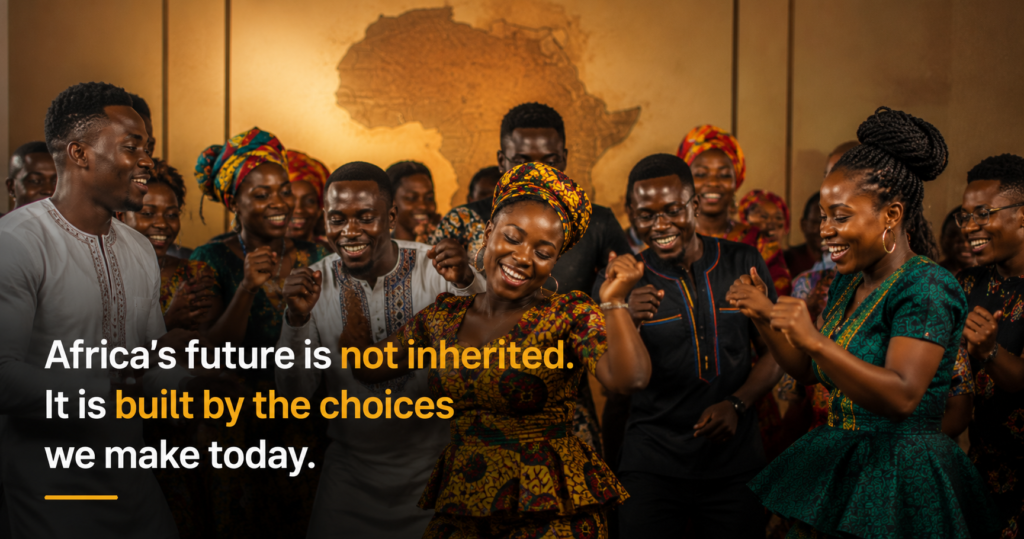
Africa’s future is shaped by the everyday choices of its people.
Regardless of age, profession, or location, everyone can contribute to positive change. Meaningful transformation begins when ordinary people choose to make an extraordinary difference within their own communities.
You can contribute by:
- Volunteering with humanitarian organizations
- Supporting community development projects
- Mentoring young people
- Promoting accountability
- Supporting quality education
- Protecting the environment
- Advocating for human rights
- Donating to credible nonprofit organizations
- Sharing knowledge within your community
Every meaningful transformation begins with people. Small actions, when multiplied across millions of people, create extraordinary impact.
Why Humanitarian Organizations Matter
Governments alone cannot solve every social challenge.
Humanitarian organizations play a vital role in complementing public efforts by responding to community needs, empowering vulnerable populations, and advocating for sustainable solutions.
Across Africa, nonprofit organizations contribute by:
- Supporting education initiatives
- Improving healthcare access
- Promoting food security
- Advocating for human rights
- Empowering women and girls
- Encouraging youth participation
- Strengthening community resilience
- Responding to humanitarian emergencies
These efforts help create stronger communities while promoting dignity, inclusion, and opportunity.
At LiftOne Humanitarian Foundation, we believe meaningful development begins when compassion is combined with action, accountability, and community participation.
Our mission goes beyond providing support during difficult moments. We are committed to empowering communities, promoting social justice, encouraging civic responsibility, and creating opportunities that improve lives for generations.
Every community outreach, educational initiative, advocacy campaign, and partnership reflects our belief that lasting development happens when people are equipped with the knowledge, resources, and opportunities to thrive.
Africa Day reminds us that building a better continent requires collective action, and every individual has a role to play.
Creating lasting impact requires partnerships among governments, civil society, businesses, development partners, and citizens. Together, these stakeholders can build stronger communities where everyone has the opportunity to thrive.
How Young Africans Are Changing the Narrative
Across Africa, young people are redefining leadership.
They are launching businesses, developing technology solutions, leading community initiatives, creating employment, advancing education, and driving conversations around accountability and good governance. Rather than waiting for change, many young Africans are becoming the change they wish to see.
Supporting youth leadership is not simply an investment in tomorrow. It is an investment in today. This requires:
- Quality education
- Digital literacy
- Skills development
- Access to finance
- Mentorship
- Leadership opportunities
- Inclusive policies
When young people succeed, communities prosper.
Frequently Asked Questions About Africa Day
What is Africa Day?
Africa Day is celebrated every year on May 25 to commemorate the founding of the Organization of African Unity in 1963 and to promote unity, development, and cooperation across Africa.
Why is Africa Day important?
Africa Day celebrates Africa’s achievements while encouraging governments, organizations, and citizens to work together toward peace, sustainable development, and economic growth.
What is the theme of Africa Day?
The theme changes periodically depending on priorities identified by the African Union. Common focus areas include governance, youth empowerment, education, health, economic integration, and sustainable development.
What is Agenda 2063?
Agenda 2063 is the African Union’s long-term strategic framework for achieving an integrated, prosperous, peaceful, and people-driven Africa by the year 2063.
Why are nonprofit organizations important in Africa?
Nonprofit organizations complement government efforts by providing humanitarian support, promoting education, advocating for human rights, strengthening communities, and encouraging citizen participation.
Conclusion
Africa Day reminds us that Africa’s future will not be shaped by hope alone. It will be shaped by informed citizens, accountable leadership, resilient institutions, thriving communities, and young people who are empowered to lead.
Celebrating Africa’s achievements is important. Building on those achievements is even more important.
The continent’s journey has been marked by resilience, courage, innovation, and an unwavering determination to overcome challenges. While significant progress has been made, the work of building an inclusive, peaceful, and prosperous Africa continues.
Governments, businesses, nonprofit organizations, educational institutions, and citizens all have a role to play. By strengthening institutions, investing in education, empowering young people, promoting accountability, and supporting community-led solutions, we can contribute to an Africa where opportunity is accessible to everyone.
As individuals, organizations, and communities work together, Africa moves closer to a future defined not by its challenges but by its opportunities.
That future begins with all of us.
Call to Action
At LiftOne Humanitarian Foundation, we believe lasting change begins with informed, empowered, and united communities.
Whether through volunteering, advocacy, partnerships, or community development initiatives, every action contributes to a stronger Africa.
Join us in creating opportunities, strengthening communities, and building a future where no one is left behind.
Together, we can lift lives, strengthen communities, and shape Africa’s future.